11 Best AI Resume Builders (2026): Zety vs. Teal vs. JobTailor
Don't choose the wrong resume builder. We compare Zety, Resume.io, Canva, Teal, and JobTailor to help you find the best tool for getting more interviews in 2026.
11 Best AI Resume Builders in 2026: Zety vs. Teal vs. JobTailor (Honest Review)
If you search for an "AI resume builder" in 2025, you will see the same names again and again: Zety, Resume.io, Canva, Teal, and Rezi. They all promise to get you hired, but most of them solve the wrong problem. They focus on giving you a "pretty PDF," when what you actually need is more interviews.
So, which tool should you actually use?
In this guide, we break down the top players in the market to help you decide. We will look at:
- The Template Giants: Great for beginners, bad for your wallet.
- The Designers: Great for visuals, risky for ATS.
- The AI Optimizers: The new wave of tools (like JobTailor) that actually help you beat the algorithms.
Quick Verdict: The "Best For" Cheat Sheet
| Category | Top Pick | Best For... |
| --- | --- | --- |
| Best for Tailoring | JobTailor | Senior candidates applying to many specific roles who need to pass the ATS. |
| Best for Templates | Zety / Resume.io | First-time job seekers who just need a standard, professional document. |
| Best for Design | Canva | Creative roles (Designers, Marketers) where visuals matter more than ATS. |
| Best for Organization | Teal | People who love spreadsheets and want to track every bookmark. |
*
Category 1: The "Template Giants"
Contenders: _Zety,_ _Resume.io__, MyPerfectResume, Resume-Now, CVwizard, BetterCV, ResumeBuild_
These are the most famous tools on the market. They work similarly: you pick a template, fill in the blanks, and download a PDF.
The Pros:
- Polished Designs: The templates are battle-tested and look professional.
- Easy Wizard: Great if you are starting from zero and don't know what to write.
- Pre-Written Content: They offer "drag-and-drop" bullet points for common jobs.
The Cons (The Honest Truth):
- The "Generic" Trap: Once you download the PDF, you are stuck with it. Tailoring that PDF for 50 different job applications is a manual nightmare.
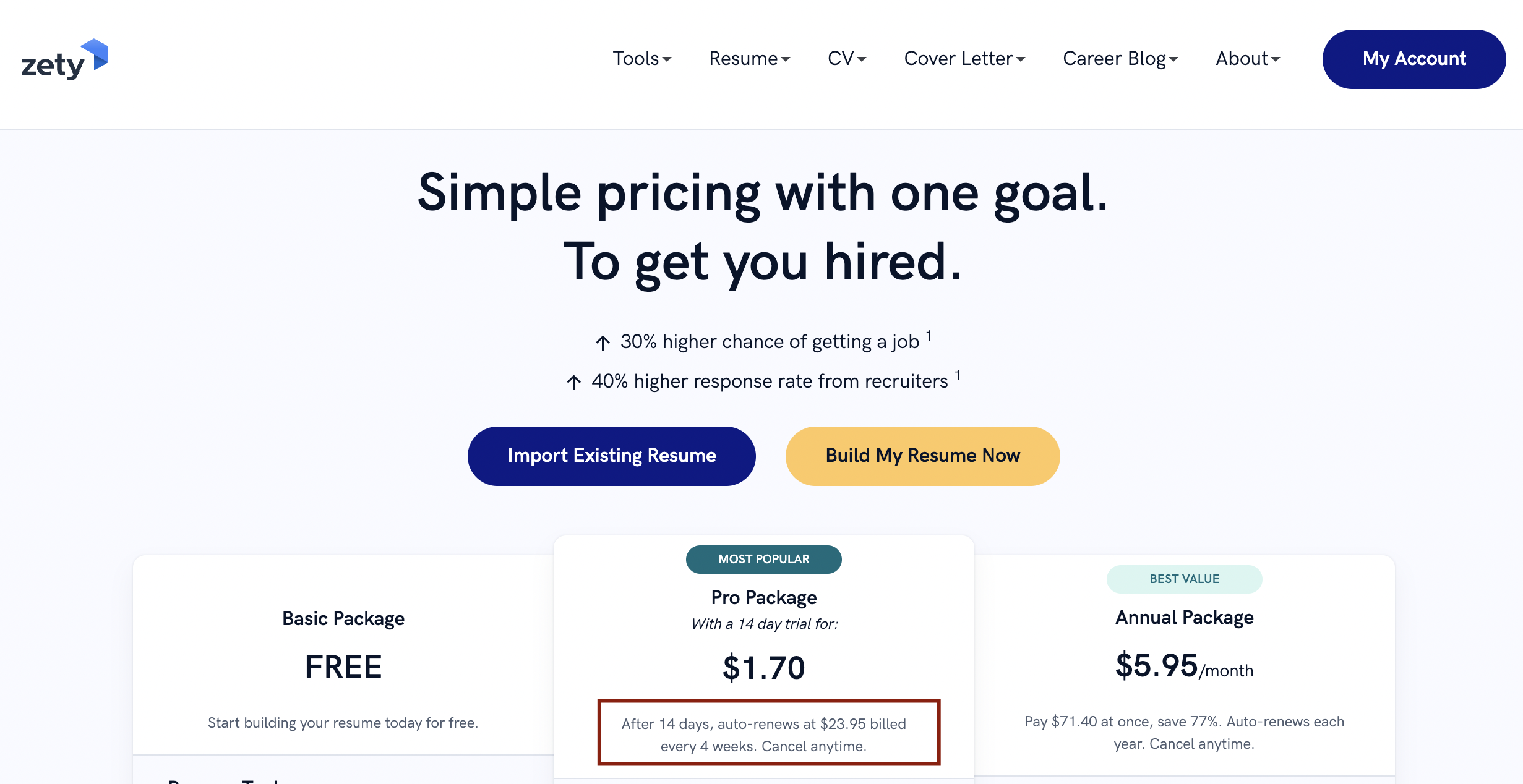
- Subscription Traps: Most of these tools offer a "14-day trial" for ~$2, which quietly auto-renews into a ~$25/month subscription. It is a business model built on you forgetting to cancel.
The Verdict: Use these if you need _one_ resume for _one_ specific job fair. Avoid them if you are launching a serious, multi-month job search.
*
Category 2: The "Designers"
Contender: _Canva_
Canva is not a resume builder; it is a design tool.
The Pros:
- Unlimited Creativity: You can make your resume look like a magazine cover.
- Personal Branding: Perfect for demonstrating design skills.
The Cons:
- ATS Nightmares: Canva resumes often use text boxes, icons, and layers that confuse Applicant Tracking Systems (ATS). A robot might read your "Senior Manager" title as gibberish.
- Zero Optimization: There is no AI to tell you if your keywords match the job description.
The Verdict: Only use Canva if you are handing a printed resume to a human, or emailing a portfolio directly to a Creative Director.
*
Category 3: The "AI Optimizers" & Workflow Tools
Contenders: _Rezi, Teal, JobTailor, Enhancv_
This is the modern category. These tools don't just format your text; they help you optimize it.
1\. Rezi (The Scorer)
Rezi is obsessed with the ATS. It gives you a "Rezi Score" and focuses heavily on keywords and formatting compliance.
- Good for: Engineers and technical users who want to "gamify" their optimization score.
- Missing: It focuses on the document, not the workflow of applying to 50 places.
2\. Teal (The Tracker)
Teal is a "Job Search Operating System." It excels at bookmarking jobs from LinkedIn and organizing them in a Kanban board.
- Good for: People who love organization and want a CRM for their search.
- Missing: While it has a resume builder, its core strength is tracking, not the deep, generative AI tailoring of the content itself.
3\. JobTailor (The Tailoring Engine)
JobTailor takes a different approach. We believe the problem isn't "building a resume" - it's tailoring it 50 times.
- How it works: You upload your base resume once. Then, for every job you apply to, you paste the job description. JobTailor's AI rewrites your summary, skills, and bullet points to match _that specific role_. (For a deep dive on why this matters, read our guide on how to tailor your resume to a job description).
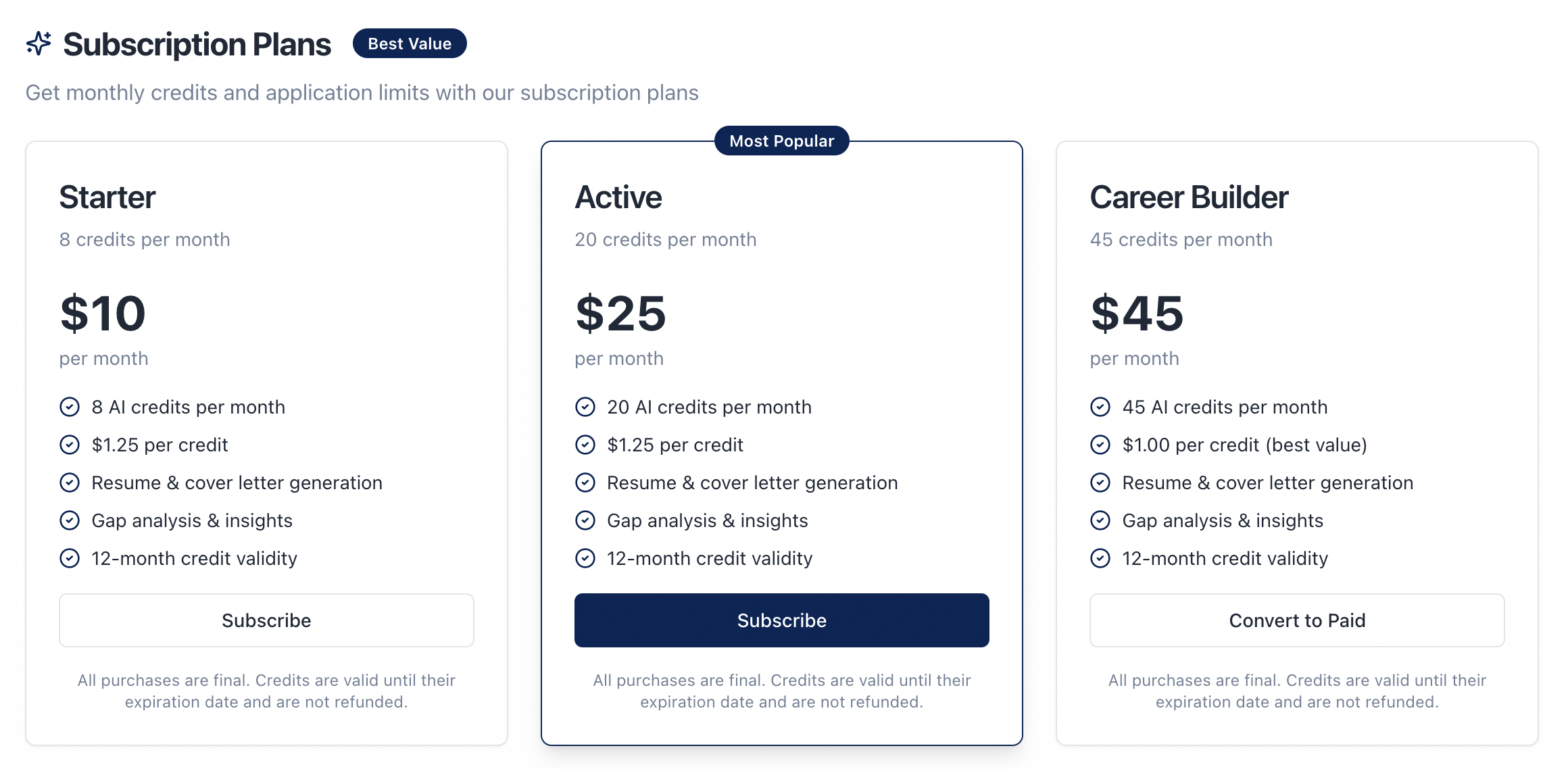
- The "Anti-Subscription" Model: Unlike the giants, JobTailor uses a credit-based system. You pay for what you use (tailored resumes), with no surprise auto-renewals draining your bank account.
- Built-in Tracking: We track which version of your resume you sent to which company, so you never lose the context when you get that interview call.
*
Summary: Which Tool Should You Choose in 2026?
The "best" tool depends entirely on your stage in the career journey.
- If you have NO resume: Start with Zety or Resume.io to get a solid baseline structure. Just remember to cancel the subscription.
- If you are an Artist: Go with Canva, but keep a plain text version for online forms.
- If you are a serious Job Seeker: If you plan to apply to many roles and want to maximize your callback rate, JobTailor is the only tool built specifically for high-volume, high-quality tailoring.
Stop sending generic applications. Try JobTailor today and see what it's like to have an AI that actually knows you.